IDTechEX: Wide bandgap momentum meets silicon’s staying power

As SiC and GaN gain ground in EVs and data centres, silicon’s proven reliability continues to anchor wind power – but for how long? Rebecca Pool talks to Matthew Fall, IDTechEX, to find out more.
With the power electronics market on course to more than double in the next decade, the industry is entering an era of transition. Analyst firm, IDTechEx Research, forecasts market growth from US$25.5 billion this year to US$ 65.2 billion in 2036 – representing a CAGR of 10% largely driven by electric vehicle and data centre applications.
As OEMs push for ever-greater efficiency, reliability and power density, both silicon carbide and gallium nitride will capture market share from silicon. Yet despite the clear momentum behind wide bandgap semiconductors, the industry mainstay is not stepping aside yet.
“[SiC and GaN] technologies have the potential to revolutionise the power electronics industry, enabling high-voltage operation and new power architectures, such as the 800 V e-powertrain and 800 VDC data centers,” says IDTechEx Technology Analyst, Matthew Fall. “But silicon’s proven reliability is slowing the adoption of these wide bandgap technologies in wind energy – a smaller segment of the overall market but an important contrast to EVs and data centres.”
As Fall highlights, wind generation operates at very high voltages and power, in harsh environments – think extreme temperature cycling, high humidity and strong vibrations – and component failure is very costly. Given this, component reliability is paramount and the risk of switching to newer technologies remains a major constraint.
“A lot of the key industry players in this sector are reluctant to switch away from silicon – you’ve got at least 50 years of proof of concept with silicon compared to around eight years for silicon carbide,” he says.
Also, given the sheer size of the wind turbine nacelle, where space and weight constraints are less critical, the advantages of wide bandgap semiconductors become less compelling. “Miniaturisation is less relevant and while silicon carbide has certainly proven its reliability in electric vehicles, reliability concerns are so much higher,” adds Fall, “So we’re seeing that the transition to silicon carbide in wind generation is still at an earlier stage.”
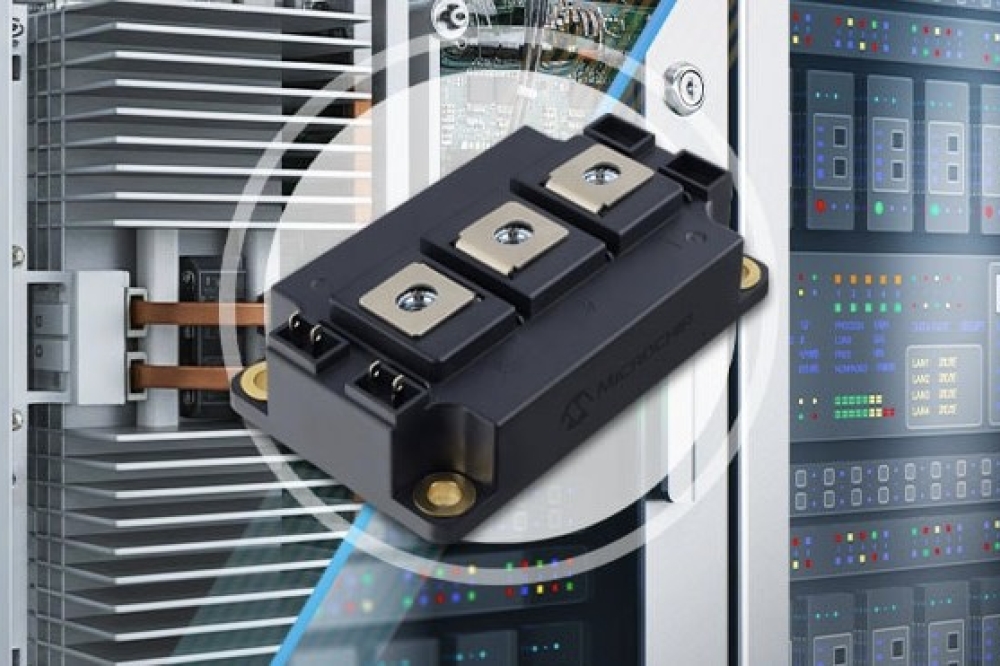
Still, late last year, Wolfspeed partnered with Hopewind to integrate its 2.3kV LM Pack module into the China-based renewable energy tech firm’s 950 VAC wind power converter. The all-SiC power module promises to simplify overall system design and provide higher efficiency, power density and reliability. As Wolfspeed noted at the time, the partnership marks a critical milestone in the ongoing evolution of the wind power industry, helping to pave the way for cleaner, more efficient energy solutions on a global scale.
But while this early integration of SiC in wind power is significant – is it a clear industry shift or more of a cautious first step? SiC MOSFETs have been researched and prototyped in wind power electronics for well over a decade with manufacturers introducing advanced packaging technologies and improved gate driver designs to ensure stable operation within the challenging conditions of the wind turbine nacelles. On the grid-side, customized switching is also being investigated to help reduce electromagnetic interference in long cable runs typical in wind farms. Even so, Fall is certain that silicon is safe, at least for now.

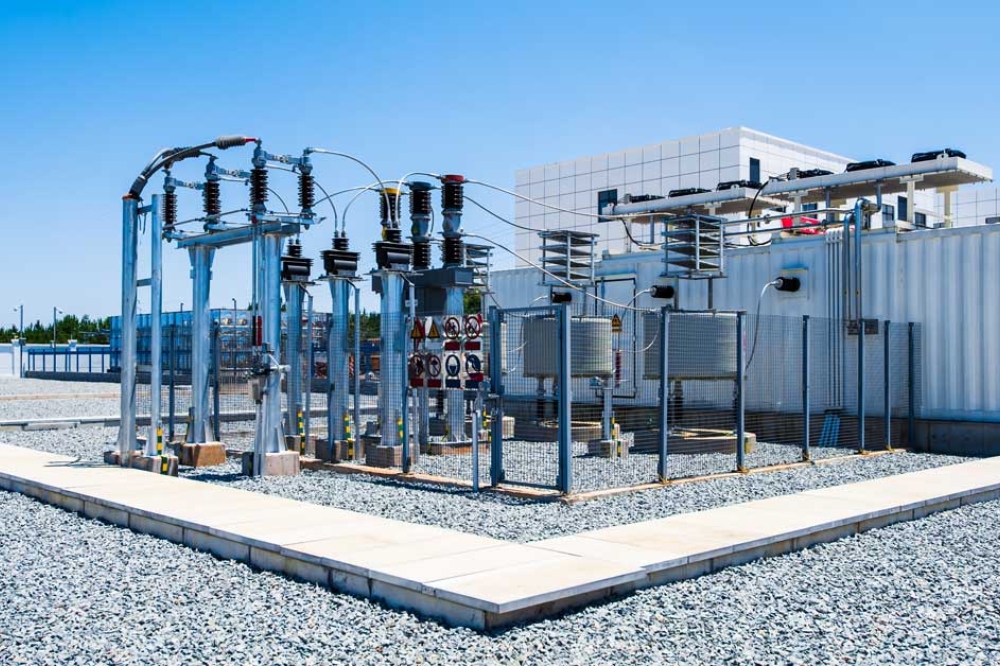
Offshore wind turbines: silicon’s proven reliability means manufacturers are reluctant to adopt silicon carbide – for now.
“I’ve spoken to some large industry players in wind power, and they don’t even have a transition to silicon carbide on their roadmaps yet,” he says. “We know that GaN and SiC are already making their way into solar [generation] but for wind power, this will be a slower, steady adoption – silicon will have a significant place here in the next ten years.”
Beyond turbines
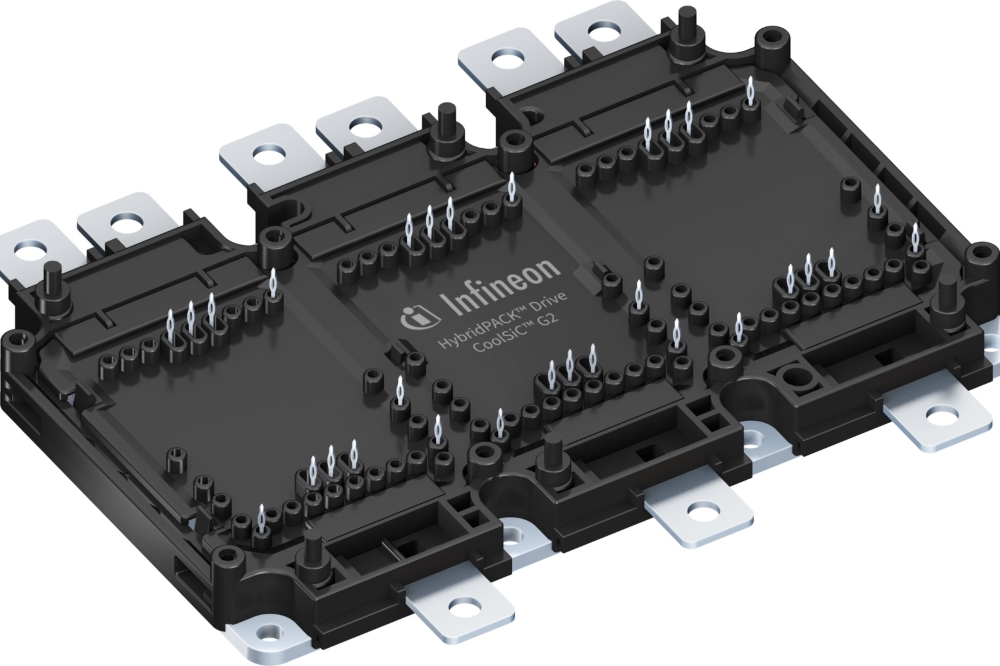
Electric vehicles are undoubtedly the dominant market for power electronics with silicon IGBTs and other silicon components having been the power device of choice in traction inverters, onboard chargers and DC-DC converters for the past two decades. But as Fall highlights, SiC MOSFETs now account for a growing revenue share of these applications and are expected to dominate traction inverters, onboard chargers and DC-DC converters by 2036. The high-temperature operation, faster switching speeds and smaller form factor offered by these devices, can deliver improved efficiency as well as weight and volume savings that ultimately support increased EV range and performance.
“What we’re now seeing is that SiC has reached this critical inflection point in the EV space – and is no longer seen as emerging,” he says. “The challenge for SiC is now to convince manufacturers that its benefits are worth [the switch from silicon] for more than EV performance models, as right now its cost premium makes it a harder sell for budget vehicles.
Still, the harder sell may not last a lot longer. Fall points to aggressive competition between Chinese SiC manufacturers dramatically reducing the price of SiC wafers. Factor in the rising quality of these wafers coupled with more and more eight-inch substrates reaching the market, and it’s easy to see why revenues are consistently growing.
And it’s not just silicon carbide. Relatively early work on GaN devices in EV traction inverters from the likes of Cambridge GaN Devices (CGD) and VisIC Technologies shows promise. Late last year, CGD won Hyundai’s ‘Open Innovation Challenge for Sporty Driving’ with its one-chip ICeGaN power transistor and also partnered with Global Foundries on production. Around the same time, VisIC raised some US$26 million to advance its D³GaN platform for electric vehicles, with the funding round led by Hyundai.

Silicon carbide is forecast to take the majority share of the power electronics industry by 2036. (IDTechEX)
According to Fall, the development of automotive GaN depends on proof of its long-term reliability as well as its ability to operate at high voltages for 800V EV power architectures – but actual tests in cars are expected in the next couple of years. “We don’t expect the EV market to completely dry up for silicon though,” he says. “The cost trade-off will remain for your budget EV that’s used for driving around cities at lower speeds.”
Data centres follow electric vehicles in terms of market share for power electronics, and offer significant opportunities – but less so for silicon. While silicon has long formed the backbone of data-centre electronics, today’s large language models and other neural networks draw substantial power when processing complex AI and machine-learning workloads – and the semiconductor’s physical limitations are becoming more and more apparent. As the industry moves from AC power delivery towards 800 VDC architectures, the pressure to improve efficiency, reduce losses and shrink power systems is also intensifying. To support compute-intensive workloads, power supply unit manufacturers are increasingly turning to wide bandgap semiconductors with their lower on-resistance, higher switching speeds, reduced losses – and decreasing costs.
“The space for processing data centre workloads is becoming more and more a premium... and there’s a strong driver for miniaturisation here,” says Fall. “In the transition to 800 VDC, I think a winning technology will be GaN, because of the need for miniaturisation and ultra-fast switching.”
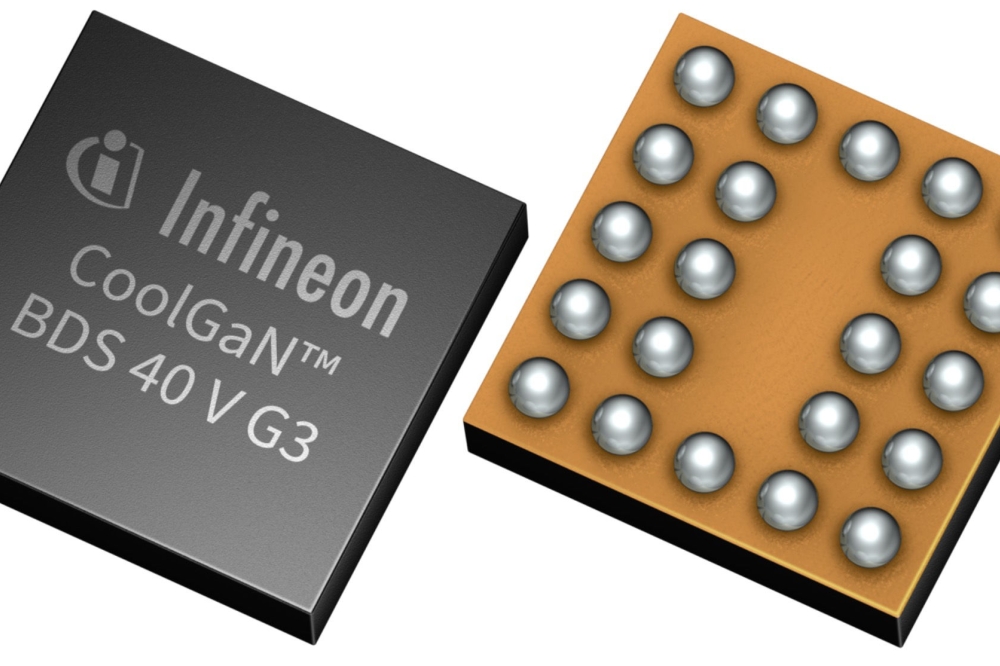
Fall highlights how organisations such as Infineon and imec are also rapidly developing 12 inch GaN-on-silicon wafers to boost economies of scale. “We believe that GaN will overtake SiC in terms of cost, and could well approach the cost of silicon in the long-term - beyond ten years,” he says.
Looking to the future, Fall also emphasises how all power electronics applications are interconnected, with innovation in one sector driving innovation in a different sector. “Switching to SiC in the wind sector would never have made a compelling argument without the history of significant research in electric vehicles,” he says. “Many OEMs still have a certain amount of tunnel vision and focus on their market. But it’s the developments in other markets that can direct research and development.”
And amidst the undeniable market erosion for silicon, Fall is confident that the industry incumbent will remain, at least within the planning horizons of today’s OEMs. “Wide bandgap semiconductors fundamentally exist to complement silicon in your more challenging environments, whether that’s high power at high voltages or ultra-fast switching frequencies,” he asserts. “We’re unlikely to see a time when silicon is completely replaced.”