Japan’s power semi giants move toward landmark consolidation
Can Mitsubishi Electric, Rohm and Toshiba’s potential merger reshape Japan’s position in global power electronics?
BY REBECCA POOL, TECHNOLOGY EDITOR
As Rohm, Toshiba, and Mitsubishi Electric continue discussions to merge their power semiconductor businesses, industry can only wait and watch for what could be the most significant shake-up in Japan’s power semiconductor sector for decades. A consolidation of these industry giants would create the world’s second-largest power chip group - trailing only Germany’s Infineon - and by pooling resources and manufacturing scale, the combined entity would be set to compete aggressively in the global market.
As the firms signed a memorandum of understanding to ‘initiate discussions’ earlier this year, Toshiba emphasised - in a company statement - the need to ensure a secure and stable supply of semiconductors in line with Japanese Government’s plans. But what lies beneath the company rhetoric?
First and foremost is the need to revitalize Japan’s fragmented power semiconductor market amidst a backdrop of the West’s technological strength and mounting price pressure from China. As John Li, Senior Analyst at UK-headquartered Omdia highlights: “The power semiconductor ecosystem in Japan is acknowledged to be quite fragmented compared to the US and Europe, where you have these behemoths such as OnSemi, STMicro and Infineon.”
“Collaboration and mergers have been discussed for quite a while now, especially with the cost decreases in wide bandgap semiconductors - particularly silicon carbide - in China,” he says. “Japan wants to optimise production efficiency, increase scale of manufacturing and allocate resources to high growth areas – and is probably trying to do this sooner rather than later, and not fall further behind.”
Recent analysis from Omdia’s ‘Competitive Landscaping Tools, March 2026’, ranked the combined power semiconductor businesses of Mitsubishi Electric, Rohm and Toshiba as second in the power device market with a 11.3% market share, whilst individually the firms hold 4th, 8th and 9th place, respectively. Infineon currently holds first place with a 24.4% market share. “A merger would also place them ahead of OnSemi and ST Micro,” points out Li.
Economic security is also key, and for Japan, this is inextricably entwined with semiconductor resilience. The nation was hit particularly hard by the global supply chain disruptions and semiconductor shortages of 2020 – intensified by the Covid-19 pandemic - prompting Japanese government to label chip production a matter of strategic national importance. As Li’s colleague and Omdia Research Director, Paul Pickering, puts it: “We all remember that time when $50,000 cars were stuck because we couldn’t get a $3 part as factories had closed – no-one wants to put themselves in that situation again.”
Japan is also keen to future-proof itself against rising overseas competition, especially from China. The Chinese government has channelled huge resources into developing silicon carbide manufacturing, from boules through to devices, whilst doggedly prioritising domestic markets.
Given Japan’s global automotive industry might, and the rising demand for SiC semiconductors in electric vehicles, Japan, as a nation, would also likely prefer a stable supply of the devices without relying on China. “SiC is important for driving domestic strength,” adds Li.
According to Pickering, he and colleagues have also long been tracking China’s power electronics strategy, noting a gradual increase in the share of Chinese suppliers within the Chinese market itself – which has profound implications for the rest of the industry. “If you take a look at Rohm’s semiconductor sales, Japan accounts for a third of sales, less than 10% comes from both EMEA and the Americas, and the remaining [proportion] of sales are in China,” he says. “So I would imagine that Rohm is now thinking that’s nearly a third of my sales that are a prime target for getting chopped away, especially as Chinese companies issue more of an aggressive posture.”
Pickering also questions if the likes of Infineon, as well as Mitsubishi Electric, Rohm and Toshiba, have concerns over China’s next move. “Could China be coming to Europe and Japan next?” he notes. “[These companies] will all want economies of scale in order to compete with that looming threat from China.”
On the flipside, the Japanese market has tended to favour domestic suppliers where possible, and, as Pickering notes, a merger of key power semiconductor firms would deplete supply sources. “Power semiconductors are commodity products which means customers are used to sourcing form-, fit- and function-compatible devices from multiple suppliers,” he says. “So the likes of Toyota and Nissan might now be thinking, ‘we had three power discrete companies competing for our business and now we only have one – do we now have a sole source situation?’”
“I don’t think Japan-based [companies] would want their supply to come from a single Japanese company, especially if the next competitors are, worst case, Chinese companies,” he adds.
Still, while much of the merger’s strategic focus looks to be centered on wide bandgap technologies, especially with the SiC competitive threat from China, silicon looks set to remain the backbone of the new power semiconductor business. “Silicon is probably going to remain the major player... [it] does the job and there’s a huge number of suppliers,” says Pickering.
Beyond Japan
The proposed merger from Mitsubishi Electric, Rohm and Toshiba comes at a time of extensive semiconductor investment, and change, in Japan. TSMC recently unveiled plans to mass-produce 3 nm chips in a reported $17 billion investment in its second Japan-based fab. The plant will eventually churn out some 15,000 12-inch wafers, via its 3 nm process, every month - well-and-truly strengthening Japan’s domestic supply chain. The Taiwan-based chip-making giant launched ‘Japan Advanced Semiconductor Manufacturing’ in December 2021, which now has support from Sony Semiconductor Solutions, Japan-based automotive firms, Denso and Toyota, and the Japanese government – its first plant opened in December 2024.
Meanwhile, in August 2022, a consortium of key Japanese firms, including Toyota, Sony, Denso and Softbank, launched the semiconductor foundry, Rapidus, with significant government subsidies. The organisation will focus on fabricating cutting-edge logic semiconductors, in collaboration with global partners, including IBM and imec, signifying Japan’s clear intention to be a global frontrunner in advanced semiconductors. Additional funds have since come from more than 30 companies, including Canon, Fujitsu, NTT, Honda Motor and Seiko Epson.
According to Pickering, these industry developments accompany tremendous geopolitical change. “People have now realised that it’s all very well having a global semiconductor supply chain, where, say, a lot of the fabrication takes place in Taiwan, and the test and assembly in Malaysia, bringing low costs,” he says. “But if, for example, you look at the Chinese rumblings in the South China Sea and the threats to Taiwan [that could affect production and shipping routes], people realise that this is also a very fragile system.”
The Omdia Research Director points to the US Chips Act, the European Chips Act - now Act 2 - and China’s Big Fund, all designed to secure domestic manufacturing and fuel technological sovereignty, especially with rising demands from AI. “This entire regionalization definitely wasn’t such a concern five years ago, and I think Japan is seeing the same landscape and thinking, ‘we need to do something here’,” he says.
But what will the likes of Infineon, Onsemi and STMicroelectronics make of the stronger competitive force that Mitsubishi, Rohm and Toshiba would bring? Both Pickering and Li believe that all companies are more focused on the rise of China.
“While it’s true that it may be concerning for Infineon, for example, that in some of its markets there’s this new number two, I think they’ll be more concerned about China-based companies,” says Pickering.
“Onsemi and ST Micro have a big play in discrete and modules, and are also focused on silicon carbide with their revenues increasing here – but currently, I don’t think they’ll be too concerned over a merger either,” adds Li.
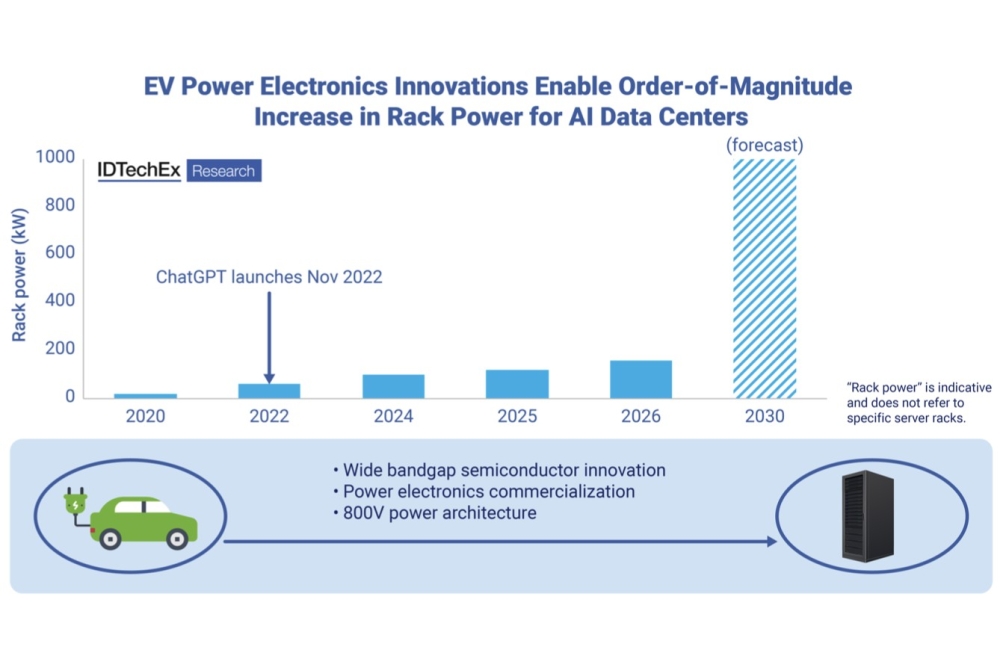
So what now for the power electronics businesses of Mitsubishi Electric, Rohm and Toshiba? Undoubtedly, Rohm’s strong SiC presence, Toshiba’s expanding wide-bandgap efforts and Mitsubishi’s power-module expertise would create an organisation with a broad tech and product range spanning many applications. In a recent presentation Rohm spelt out how the merger could deliver ‘significant business synergies’ in the burgeoning AI server and data center market, reduce wafer and assembly costs by consolidating manufacturing sites, and accelerate new product development. “If you can become this sort of ‘one-stop shop’, that makes you much more competitive on a global scale,” says Li.
However, mixed messages have emerged on the merger’s current state-of-play. Only a few weeks ago, Denso withdrew its multi-million dollar takeover bid for Rohm to secure a supply of power semiconductors, despite the pair’s long-term relationship - leaving industry players speculating the merger would take place sooner rather than later. Mitsubishi Electric’s President, Kei Uruma, also said he hoped all parties would reach an agreement as soon as possible when questioned on merger timings at a financial results briefing in April. Yet other industry reports warn of delays in talks, and Rohm CEO, Katsumi Higashi, has since stated: “We want to avoid a situation where too many cooks spoil the broth.”
Still, cautious outlooks aside, merger momentum is clearly building. As Li puts it: “There’s very many hoops to jump through so I’m not even sure this will all be consolidated by the end of this year – but we already have that memorandum of understanding, so it all looks positive.”