Moore4Power: A new power play for Europe
Infineon is leading a €91 million initiative to advance
power electronics, speed development and strengthen Europe’s semiconductor
resilience.
By Rebecca Pool, Technology Editor
In May, this year, Germany-based semiconductor giant, Infineon, launched a Europe-wide, €91 million project, Moore4Power, to develop next-generation power electronics while strengthening the continent’s tech-sovereignty. Over the next three years, 62 partners from 15 nations, including industry leaders, ABB, Airbus, Alstom, Kempower, Signify and Ingeteam, leading universities and research powerhouses, imec, Fraunhofer and CEA, will join forces to advance heterogeneous integration and system-level power electronics.
“We need a new way to manage energy – this is exactly the idea behind Moore4Power,” highlights Jochen Koszescha, Senior Director Funding Projects, and Coordination Lead for the Moore4Power project, at Infineon Technologies. “We want to overcome the limits of traditional scaling by bringing together dedicated [power electronics] building blocks to take integration to the next level.”
“You know, energy efficiency without power semiconductors just isn’t possible... This is key to the sustainable future of Europe,” he adds.

Launching the Moore4Power project (from left to right): Daniela Maier (Project lead Infineon), Ganesh Chandramouli (Head of Innovation ALSTOM), Jain Chacko (Research Scientist at Fraunhofer ENAS), Joonas Leppanen (Senior Principal Engineer R&D at ABB Finland),Vicky Chatzidogiannaki (Director at INNOVATION DISCO), Jochen Koszescha (Project Coordinator Moore4Power Infineon), Iñigo Polo (General Technology Manager at INGETEAM). [Infineon Technologies]
Funding for Moore4Power comes from the participating nations and the Horizon Europe – Chips Joint Undertaking (JU) program that aims to accelerate semiconductor research, pilot lines, and supply-chain resilience across the EU and associated countries, including the UK. The project follows the €73 million, Chips JU-funded project, PowerizeD, which ended last year and was also led by Koszescha with Infineon colleague and Moore4Power Project Manager, Daniela Maier.
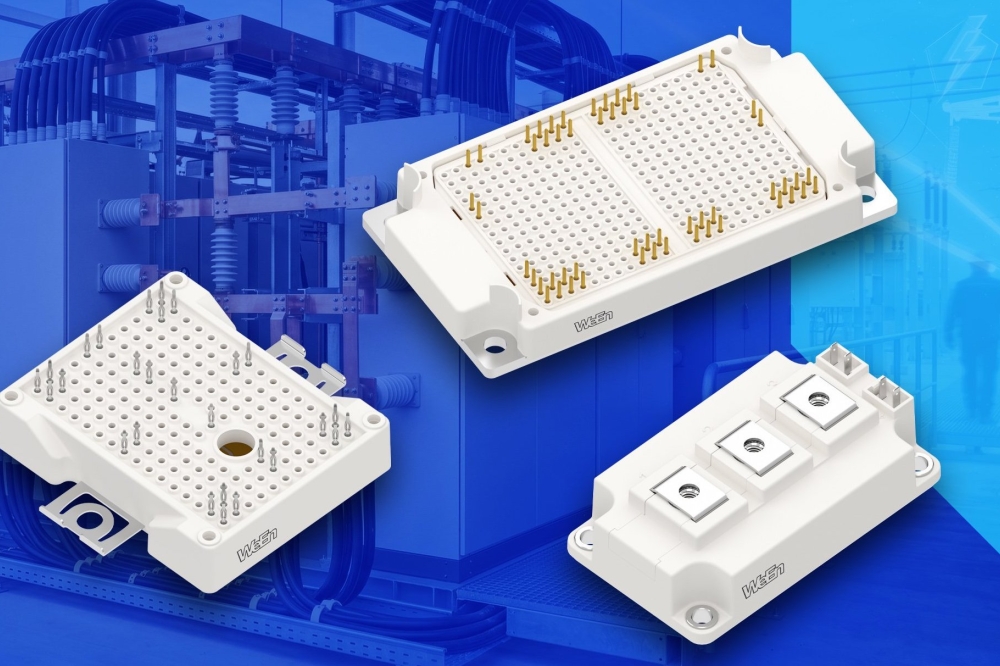
PowerizeD had set out to develop digitized, intelligent power electronics for sustainable energy generation, transmission and related applications, including intelligent monitoring and the close integration of gate drivers and control electronic with power devices. As Koszescha points out, project partners spanned the entire development chain from materials research to power modules. Together they developed a highly integrated intelligent power module (IPM) that went beyond conventional designs by integrating the complete gate driver electronics and not just monitoring functions such as temperature sensing. “We also used dual-side reinforced isolation here - this had never been done before and provides big benefits for charging applications in electric vehicles and trucks,” he says.
Moore4Power will now take the same Europe-wide organizational blueprint. However, this time, the 62 partners - both existing and new - will move beyond module-level design and extend development towards system-level integration, exploring heterogeneous approaches and chiplet-like architectures using hybrid bonding.
“Power electronics are a decisive enabler for energy efficiency and sustainability,” says Koszescha. “With Moore4Power, we are setting the next level of smart integration to achieve significantly higher energy and resource efficiency.”
Heterogenous focus
For decades, the semiconductor industry has relied on 2D shrinking and monolithic integration to deliver improvements in chip performance, power, area and cost. But as 2D scaling slows, chipmakers worldwide are moving towards heterogeneous design and on-package integration of chiplets and devices to take chip metrics further and accelerate time-to-market. Heterogeneous integration lies at the heart of Moore4Power, with partners getting ready to combine different semiconductor materials, such as silicon, silicon carbide and gallium nitride together with sensing, control and communication function to form tightly integrated systems.


Power Fab in Dresden [Credit: Infineon/Lichtwerke]
Hybrid bonding is a key technology for advanced logic chips and chiplets, to integrate CPUs and AI processors, and now Infineon and project partners will adapt this manufacturing technology for power electronics. While a logic chiplet, designed to move enormous amounts of data, may contain thousands of fine-pitch copper interconnects, power devices will need far fewer, but much larger and robust copper connections to carry high current in, say, data centre applications.
According to Koszescha, as part of Moore4Power, EV Group, an Austria-based semiconductor equipment manufacturer working on wafer and hybrid bonding, will explore advanced chiplet manufacturing methods, especially hybrid bonding, to heterogeneously integrate silicon and wide bandgap semiconductors within a power module. Power chiplet architectures, designed around module semiconductor building blocks rather than monolithic chips, will enable the development of more scalable, flexible and cost effective systems.
As Koszescha says: “We can use silicon for the control electronics and gallium nitride for power switching... Moore4Power is about intelligently combining the strengths of different semiconductor technologies. We’re really looking at smart power.”
Koszescha points to Infineon’s Smart Power Fab in Dresden - also known as Module 4 - that opened in early July (see ‘World’s largest fab...’). As well as securing around €1 billion in funds from the EU chips Act, Infineon has invested more than €5 billion into the facility, described as its largest-ever single investment. Module 4 will combine power semiconductors and analog/mixed-signal components on 300mm wafers, targeting applications including power supply systems in charging infrastructure, automotive motor control units and data centres.
As Infineon’s Andreas Urschitz, Chief Marketing Officer and Infineon Management Board Member, has said: “With this decisive and courageous move, Infineon is sending a clear message: we are taking risks and investing early to secure scalable, reliable, and resilient supply.”
“We’re taking the ‘fill-the-fab’ approach... at our module four in Dresden,” adds Koszescha. “[Moore4Power] will have the right technology and devices to take advantage of what we’re doing in Dresden – it’s a real future opportunity.”

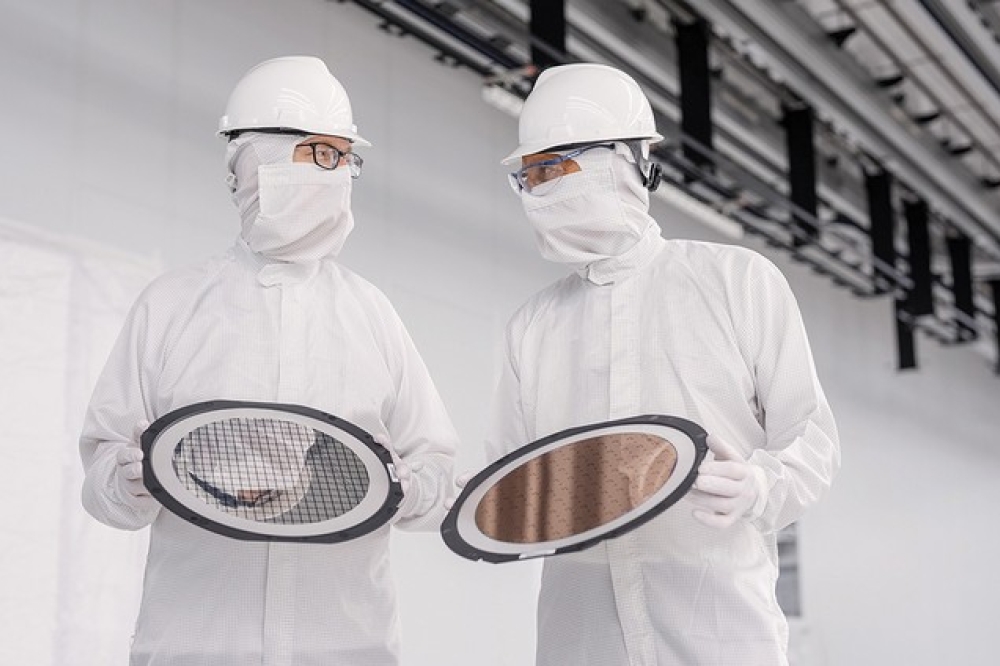
With its Smart Power Fab and the Moore4Power project, Infineon is helping to reinforce Europe’s strength in power electronics. [Infineon/mio-motion]
Speeding development
As well as integration, Moore4Power is focused on reducing development cycles via AI-assisted models, digital twins and automated workflows. Hardware and software will be designed in parallel to reduce simulation times, with the hope of reducing the time from first fab samples to a validated data-sheet release that engineers can design products around, from several weeks to one week.
“We want to more than halve the time from idea to the real product, which is very, very challenging,” says Koszescha. “We explored this in PowerizeD and now we are are going further and using AI and neural networks to simulate power semiconductor performance – we see many possibilities for using AI to speed up product lifecycles, and this is something we’re really working on.”
Heterogeneous integration and faster development cycles aside, Moore4Power is clearly part of a broader European tech sovereignty strategy, in which power electronics are critical. The project is focusing on renewable energy, e-mobility and industrial sectors where power conversion can drive both cost- and energy-savings - and for Koszescha, industry-wide collaboration is going to be crucial. “It’s not easy having collaboration between more than 60 partners – but we successfully managed this with PowerizeD, and we’re doing it again,” he says.
This time around, Airbus is onboard, which according to Koszescha is a clear indication of Infineon’s central role in Europe’s aerospace-related semiconductor strategy and strengthens European autonomy in aerospace supply chains, including aircraft power distribution. But as Koszescha emphasises, energy, mobility and industry applications, including manufacturing and robotics, all need support from power electronics.
Koszescha also points to the Chips JU €20 million funding opportunity, Call for Reinforcing Europe’s strength in power electronics. This so-called resilience call launched in early July to reinforce Europe’s strength in power electronics, scale power electronics to 300mm device production and adopt agile design.
“Moore4Power is a little bit ahead here as we’re already using some of these ideas,” he says. “Power electronics is key for future sustainability in Europe and we need this funding otherwise we will suffer in the future. All of our partners are ready to support the future resilience of power electronics in Europe.”