
Magnachip bets on power semiconductors for recovery
After shuttering its display business, Magnachip Semiconductor is pivoting to a pure-play power chip supplier for electric vehicles, renewable energy systems, data centres and more. But a tough market is testing its strategy.
Rebecca Pool, Technology Editor
Power semiconductor suppliers currently face a mixed market. While long-term demand is being driven by electrification, renewable energy systems and data-centre infrastructure, many firms are also grappling with pricing pressure and intensifying competition.
Against this backdrop, Magnachip Semiconductor is attempting to reposition itself as a pure-play power chip supplier, and despite lack-lustre fourth quarter 2025 sales - that fell 35.6% year-on-year to $40.57 million - remains resolute in its strategy. In March last year, the South Korea-based company announced plans to wind down its display arm following no takers to buy this business. This move was expected to cut the firm's annual operating expenses by up to 35% while it focused on manufacturing power semiconductors to drive revenue growth.
“Navigating the unpredictable macroeconomic headwinds will likely pose significant challenges to all companies over the coming few quarters,” stated Young-Joon Kim, chief executive at the time. “Our strategic pivot to focus exclusively on Power discrete and Power IC businesses is designed to position the Company for a return to profitability.”
The move made clear sense: the firm's power segment supplied devices to a broad set of large end markets characterised by longer product cycles and more predictable long-term growth. In contrast its display business only served the smartphone market. At the time, Kim also highlighted how Magnachip's power businesses had generated $185 million in revenue in 2024, up 13% from 2023, and that the company expected mid-to-high single-digit revenue growth in 2025.
Yet, fast-forward to today, and Magnachip's power business failed to achieve its 2025 single-digit revenue growth. Power analog revenue has declined by around 3.8% while power IC revenue has dipped by some 3.4%, both year-on-year. The company attributes the disappointing revenues to intense pricing pressure on legacy products, particularly from China-based competitors, as well as manufacturing plant operating below optimal capacity.
Still, declining revenues aside, Magnachip launched 55 'new-generation' products in 2025, compared with four in 2024. The firm also increased R&D spend and invested in its surviving South Korea Gumi fab - dedicated to manufacturing power semiconductors - to boost mid- to long-term competitiveness. All in all, $21.4 million was spent in 2025 on the Gumi fab upgrade, of which $17.0 million was funded through equipment financing loans.
Much of this activity took place under Kim's successor and long-time board member, Camillo Martino, who stepped up to the role of interim chief executive in August 2025 to accelerate the company's power semiconductor transition. At the time he emphasised the company's commitment to more than halving capital expenditure, whilst maintaining critical power investments. And at the firm's Q4 2025 Investor Conference Call he asserted: “[The product launches] are a massive acceleration by our engineering team and reflects targeted investment for longer-term growth... [They] are designed to improve our competitiveness and improve our product margin structure over time.”
“We need highly competitive products to win - where we do have competitive products, we can absolutely win,” he added. “That’s the core point behind our product strategy.”
Power proliferation
Magnachip's rapid delivery of new power semiconductor devices is intended to increase its market competitiveness and ultimately raise profit margins. The jury remains out on the success of this strategy but the proliferation of products across many markets can hardly be missed.
In early 2025, the company unveiled 650V IGBTs for solar inverters alongside 600V–700V super-junction MOSFETs targeting AI, industrial systems and smart home appliances, including laptop adapters, appliance inverters, power supplies and lighting. Meanwhile, 650V SJ MOSFETs were released for consumer electronics including gaming monitors and chargers, and eventually AI data centres.
Along the way, 80V MOSFETs were delivered, targeting e-scooters and light electric vehicles - these devices have already been supplied to a 'leading global motor manufacturer'. And Magnachip closed 2025 on a deal with long-time partner Hyundai Mobis to develop high-performance IGBTs for automotive traction inverters – Mobis plans to start mass production of EV inverters, incorporating the IGBTs, this year.
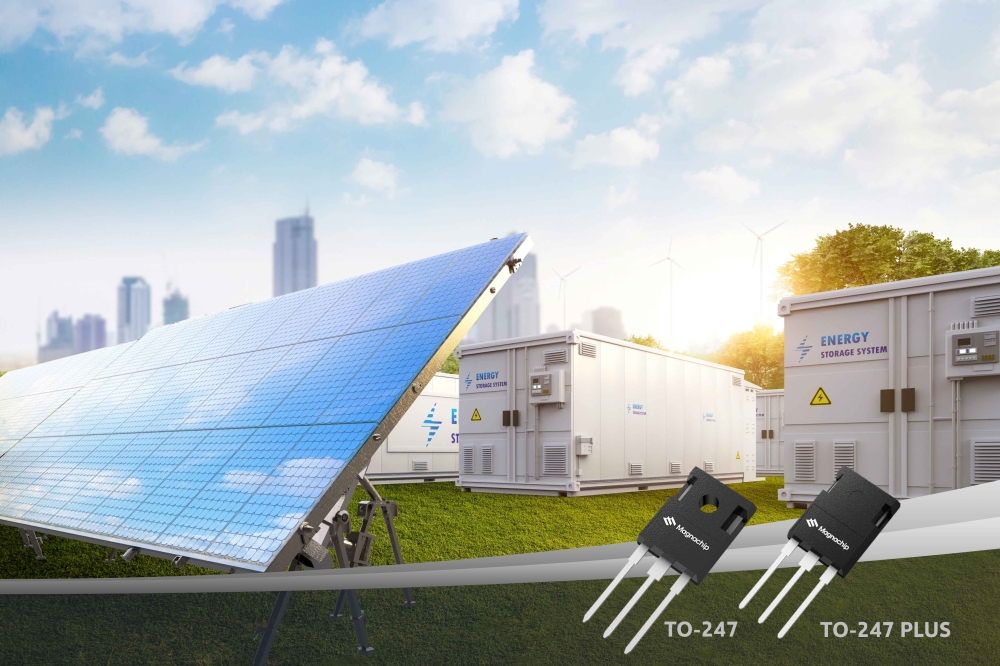
For 2026, plans are firmly in place to introduce more than 50 products that will target automotive, industrial/motor control, solar and energy-related applications, server and data infrastructure, and eventually robotics markets. Both 650 V and 1200 V IGBTs for solar inverters and industrial energy storage systems have already been released with 750V devices promised later this year. Meanwhile, a 24 V MOSFET for battery protection circuits in next-generation tri-fold smartphones, wearable devices and tablets has been released. According to Magnachip, the 24V MOSFET is in mass production and is currently being supplied to a major global smartphone manufacturer.
Product development plans are accompanied by robust market forecasts. For example, global tech research firm, Omdia, recently reported the global IGBT market value exceeded $11 billion in 2024 and is set to expand from $12.3 billion in 2025 to $16.9 billion by 2028.
Omdia also predicted the global solar inverter and industrial energy storage systems market to grow from approximately $1.4 billion in 2024 to $2.7 billion in 2029, representing a CAGR of approximately 10.6%. The firm has also forecast the global market for silicon power MOSFETs below 40V, including smartphone batteryFETs, to increase from $4.2 billion in 2025 to $5.2 billion in 2029 – that's a CAGR of 4.6%.

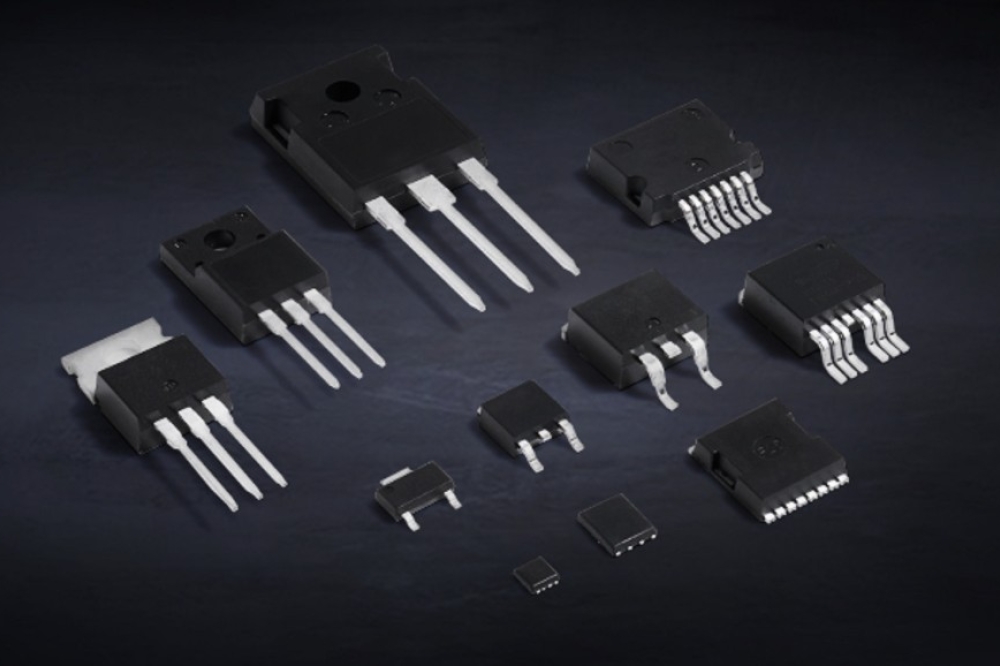
In March 2025, Magnachip delivered super junction MOSFETS for AI, industrial applications and smart home appliances
Wideband gap semiconductors
Amid the product development and buoyant market forecasts, Martino has remained bullish on his company's future financials. At the latest investor call he stated: “We expect new generation products to comprise approximately 10% of our total revenue in the fourth quarter of 2026, up from 2% for the full year 2025.”
“Looking back at 2025, we have implemented many changes to lay the foundation to improve the financial and go-to-market fundamentals which we believe will result in a positive and consistent recovery over time,” he said. “We are investing responsibly in areas where we see great potential, while staying disciplined and realistic about what it takes to turn a power semiconductor business around.”
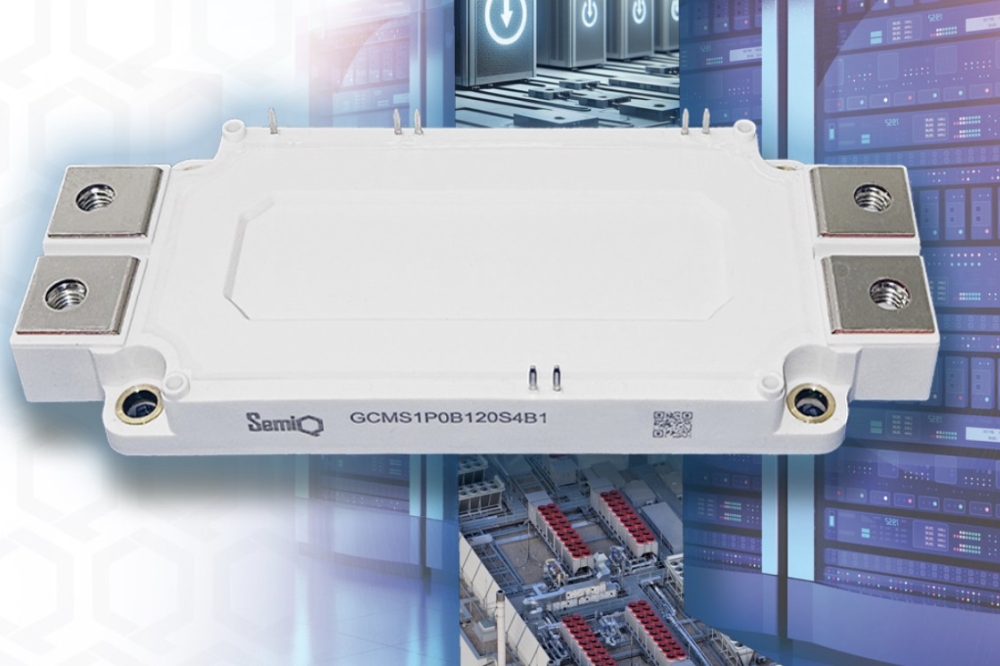
As well as expanding its power MOSFET, IGBT and IC businesses, the company will now develop modules, combining multiple dies into a package to increase product content per application. Development of silicon carbide products - described as a “multi-year initiative” - is also planned.
“Our entry into the silicon carbide market will be thoughtful and deliberately targeting markets where we have long term revenue visibility and in which return on invested capital and payback are demonstrably attractive,” said Martino. “We believe our reputation and geographical location should enable us to access such attractive markets segments.”
Undoubtedly, Magnachip's focus on power products also makes it a more straightforward acquisition target. The company has previously explored options - in 2021 Chinese equity firm, Wide Road Capital, tried and failed, to acquire the firm - and could now attract interest from larger semiconductor firms or private equity investors if its power business succeeds.
In the meantime, Martino remains realistic about the challenges ahead, pointing out how any new products will take time to qualify, ramp and then contribute to 'meaningful revenue'. “Turnaround will take time,” he acknowledged. “In 2026 we still expect legacy products to represent the vast majority of revenue, and pricing pressure affecting these products to continue.”
“So, 2026 will remain a challenging period - especially for gross margin - as we transition the portfolio and scale new-generation products,” he added. “We believe we are taking the right corrective actions to improve our competitive position and create a path to meaningful value creation.”