Pakal powers up silicon's next act
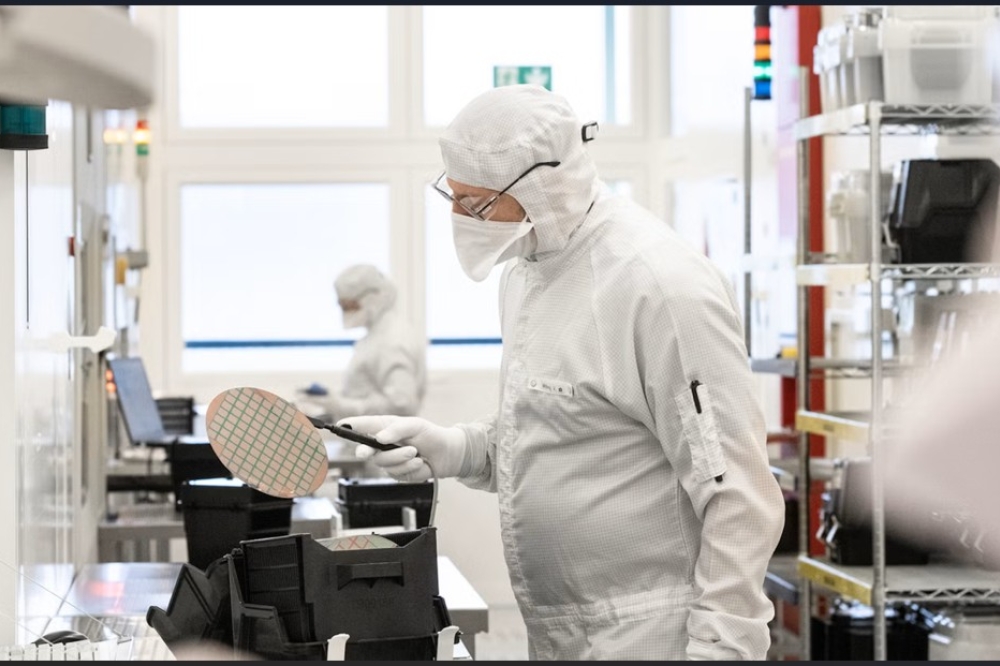
With its IGTO(t) switch and Hitachi Energy deal, can Pakal Technologies bolster silicon’s edge in high-voltage power electronics and challenge IGBTs and SiC devices?
Rebecca Pool, Technology Editor
Earlier this year, US-based silicon power semiconductor firm, Pakal Technologies, and Hitachi Energy, Switzerland, joined forces to deliver next-generation power modules to rail, renewables, energy storage, AI and data centre markets. By integrating Pakal's insulated gate turn-off (thyristor) power switch into Hitachi Energy's high voltage (≥ 3.3 kV) modules, the partners intend to reduce energy losses and improve overall efficiency in high-voltage power conversion - a key challenge in large-scale electrification.
“We have proven reliability, manufacturability and scalability, and we believe markets have been asking for this as long as there have been power semiconductors,” says Pakal Technologies CEO and co-founder, Benjamin Quinones. “This is a direct drop-in replacement for IGBTs, and many applications will be helped [by the technology]. Now is the time to share this with the world.”
Pakal Technologies launched in 2017 to develop and commercialise the IGTO(t), which is described as the “first new high-voltage silicon power switch since the IGBT”. The firm's leadership is impressive. Alongside Quinones, trench MOSFET inventor, Richard Blanchard, and advanced power diode tech innovator, Vladimir Rodov - who pioneered Diodes Incorporated's Super Barrier Rectifier (SBR) and the Field Effect Rectifier Diode (FERD) from STMicroelectronics - are co-founders. Blanchard also serves as Executive Chair while Rodov is Chief Scientist – both have now developed the IGTO(t) power switch.
As Quinones puts it: “We have these innovative, creative, thoughtful fellows asking hard questions in silicon, and I think they both agree the IGTO will be bigger than all of these [past devices] combined.”
Silicon compromises
Power switching in silicon involves balancing voltage rating, current capacity and switching speed. In high-power applications, thyristors - built on a four-layer structure of alternating positive- and negative-type semiconductor regions - are robust and have low conduction losses. However, these devices are limited in controllability and cannot be turned-off via their gate, making them impractical for compact, high-speed power conversion. In contrast, MOSFETs lack the four-layer bipolar structure of the thyristor, and instead rely on majority charge carrier devices. These devices can achieve very high switching speeds, but are restricted by conduction loss efficiency and thermal limits.
IGBTs were developed to circumvent these issues, combining the high voltage and current capability of thyristors with the ease of drive of MOSFETs. Still, these devices rely on a three-layer bipolar structure, fundamentally limiting current density and conduction efficiency compared to the four-layer thyristor.
Given these constraints, Rodov and Blanchard set out, more than a decade ago, to develop a high voltage silicon switch that combines the efficiency and low conduction losses of thyristors with the switchability of IGBTs. They combined a thyristor-like four-layer architecture with the gate-controlled switching of the IGBT, creating the IGTO(t). Using a novel trench gate design to actively manage the electric fields and carrier dynamics within the silicon, their new device was able to achieve low conduction losses through dual-carrier operation while retaining turn-on and turn-off capability via an insulated gate.
According to the firm, the IGTO(t) achieves up to 30% lower conduction losses than state-of-the-art IGBTs at high current and temperatures while maintaining IGBT-like switching performance. “We really have this tremendous advantage here,” points out Quinones.
The company claims its devices already beat the efficiency of the best IGBTs, and with equalized switching, offer dramatically lower VCE(sat) (often >0.40 V lower) under real-world operating conditions and temperatures. And because the voltage gate drive switching mechanism is the same as that of the IGBT, the device can serve as a direct drop-in upgrade in many applications. “We've managed to get the best of all worlds here... and that's what will make our company extremely profitable,” says Rodov.
Manufacturing promises to be straightforward. According to Quinones, the IGTO(t) can be fabricated using fully-amortised legacy silicon facilities. As Blanchard notes: “The same fabs can be used to fabricate both the trench IGBT and the trench IGTO – it's an easy transition into the fab.”
Likewise, the Pakal Technologies executives expect the IGTO(t) cost to be on par with an IGBT. “The numbers of layers and masks, and process steps, for the trench IGBT and trench IGTO are shockingly similar,” says Quinones. “At high volume, our cost will be comparable to that of a high quality IGBT manufacturer.”
Following a supply partnership with Richardson Electronics, US, initial shipments of both 650V and 1200V IGTO(t) power switches are underway. So far, devices target sub-20 kHz, medium frequency high power applications, including industrial motor drives, electric vehicle traction inverters, renewable energy inverters, uninterruptible power supplies and welding equipment. Right now, this places the IGTO in the operating window where silicon remains dominant; applications that demand high efficiency at moderate switching frequencies but do not justify the cost of wide bandgap materials.
“From day one we've been targeting IGBT use-cases and will now be going up the switching frequency ladder,” says Quinones. “We hope and expect to replace many, many IGBTs in different applications.”
Alternative technologies
But what about silicon carbide MOSFETs? Analysts have predicted the SiC MOSFET market to rapidly grow at around 30% CAGR over the next decade, reaching upwards of $20 billion by 2035 – with these devices steadily capturing market share from silicon IGBTs along the way.
Quinones affirms that for applications above 80 kHz, the fast-switching SiC MOSFETs come into their own. “Where customers really need that high frequency switching with relatively high power, they can pay the price increase and should 100% use silicon carbide, and not the silicon IGBT or our IGTO,” he comments.
“In reality, we think silicon carbide will always be about twice the cost of the corresponding silicon,” he adds. “But the market is already large, it's rapidly growing, and there's room for many winners here... And where silicon persists, which we think will be around 70% of the [power semiconductor] market, then big chunks are going to go to the IGTO.”
Blanchard also adds perspective on the broader semiconductor market, questioning the rationale for turning to wide bandgap semiconductor devices. “When you consider performance and cost at what point, if at all, are either SiC or GaN superior [to silicon],” he asserts. “[For manufacturing], you're also going to need to have a certain number of GaN and SiC fabs to supply the market-place.”
Beyond Hitachi
With Hitachi Energy now incorporating the IGTO(t) silicon power switch to its ≥3.3 kV power semiconductor modules, Pakal Technologies is eyeing other tech opportunities. Quinones is confident the IGTO(t) can scale from 650V all the way to 10 kV. “We will be filling out the voltage families now,” he says.
The firm will also be looking to deliver numerous variants of its products, which will follow in the next few years. Both a bi-directional and an ultra-fast IGTO can be expected, as well as a reverse-conducting IGTO. “In all of these, we will be bringing the industry better and better performance with each product generation,” says Quinones.
The CEO also highlights how he and Pakal Technologies colleagues are eager to partner with a global automotive industry player, integrating their IGTOs into power modules rated up to 2.5 kV, targeting mainstream EVs through to heavy-duty traction systems. Key applications would include rail, range extenders for electric vehicles, hybrid inverters that currently combine SiC and silicon devices, ANPC (Active Neutral Point Clamped) 3-level inverters and solid-circuit breakers. “If it comes down to an IGBT or us, then we firmly believe a global partner in the automotive space should use our technology,” asserts Quinones.
In the meantime, investment is set to follow soon. Pakal Technologies secured $25 million in its Series B funding round back in January 2025, which was led by London- and Connecticut-based venture capital firm, New Science Ventures. Additional funds came from high-tech VC firm and past investor Translink Capital as well as energy efficiency VC investor, Arborview Capital.
“We're raising Series C financing as we speak, and will use these resources to develop our additional products,” says Quinones.
For Rodov, Pakal Technologies' journey is just beginning. “This is a new animal in the field - we've got some new physics and a new construction,” he says. “Our optimization of our products has just started and while we see many many possibilities ahead of us, there will be many more we have yet to discover.”